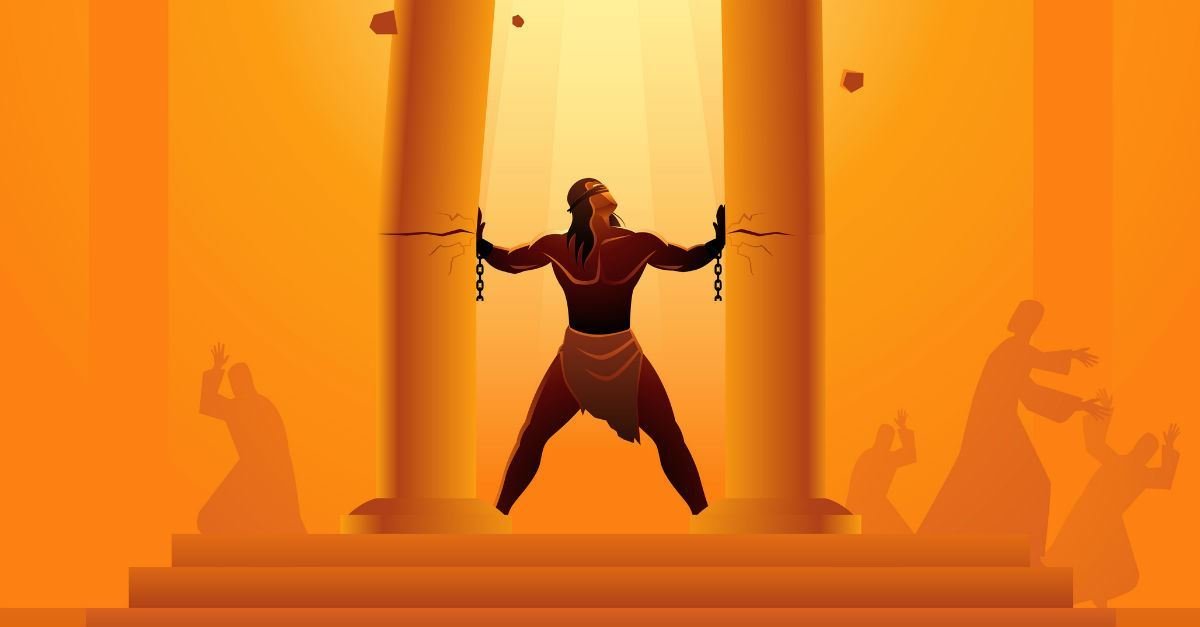
Check out the featured post and read more here: https://www.ibelieve.com/christian-living/samson-and-the-danger-of-compromise.html
Have you ever wondered how someone can be called by God yet still make such destructive choices? Perhaps they are following the Lord in some decisions, but certainly not all. Or maybe, you clearly see God’s leading in their life, but then they choose to go their own way?
As sinful and fallen human beings, we’ve all been here. God calls each of us, and yet daily, we battle temptation between what He wants us to do and what we want to do. We get into grooves where we’re close to the Lord, but then a few weeks later, we grow stagnant and distant. The good news is that we are all called by God. He has unique plans for each of us. The bad news is that we will continue to be pressured and tempted by the choices of this world. Samson shows us what happens when we allow our desires to overtake God’s.
When Israel continued to sin against the Lord over and over again, He sent judges to rule over them. Samson is known as one of these judges, yet his story is one of the most compelling and complicated in Scripture.
Who Was Samson?
At this time, Israel was oppressed by the Philistines. God’s people had again become enslaved because of their disobedience. But by Judges 13, we see that Samson was a blessing to his parents. It was a miracle that he was born in the first place, and God placed a high calling on his life from an early age. Judges 13:24-25 tells us that Samson wasn’t just blessed by the Lord, but that the Spirit of the Lord was within him:
“When her son was born, she named him Samson. And the Lord blessed him as he grew up. And the Spirit of the Lord began to stir him while he lived in Mahaneh-dan, which is located between the towns of Zorah and Eshtaol” (Judges 13:24-25, NLT).
As a Nazarite, Samson wasn’t allowed to cut his hair. He had been set apart for God and should refrain from unclean things. This calling was placed on his life even before he was born.
Experiencing a relationship with Jesus from an early age is crucial to our overall development. However, experiencing this relationship isn’t enough; we must learn to maintain it and allow it to be directed by God. And this is the tension we see in Samson’s life by the time we reach Judges 14. Samson followed God, but he experienced tension between divine purpose and human weakness.
Samson Desired What Looked Good
It was an impulsive desire that led Samson to demand that he marry a Philistine woman (Judges 14:1). Though God would use this to eventually destroy the Philistines (Judges 14:4), it caused him and his family a lot of calamity. His marriage later caused anger, compromise, and ignorance of God’s sovereignty in his life. Because even though his parents object to Samson’s “wants,” he insisted the woman was “right in his own eyes.” Key words: right in His eyes, not the plans God had for him.
The Spirit of the Lord was clearly with Samson: He ripped a lion’s jaws apart with his bare hands, killed thirty men in Ashkelon, destroyed many Philistines, set a city on fire, and used the jawbone of a donkey to conquer a thousand men. But though Samson was gifted and chosen, calling doesn’t eliminate the need for character. And when we begin to compromise our character, downfall shortly results.
When we live by desire instead of discernment, we choose what we feel is right instead of seeking the Lord’s guidance. Yes, God can still use our mess-ups and flaws as He did with Samson, but that isn’t a reason to do wrong and disobey Him intentionally. Though Samson’s choices were unwise, they merely echoed the spiritual chaos we see in almost every other judge’s life in the book of Judges. Not only does desire cause faulty discernment, but it also calls us to compromise our belief system.
In Judges 14, for example, Samson killed a lion with the Lord’s strength. There’s no question God gave him that power. When Samson later goes back and eats honey that has grown inside the carcass (and gives some to his parents), it’s as if he’s forgotten his purity. He doesn’t just violate his own Nazarite purity, but causes his parents to sin as well. Sin often progresses gradually through small compromises, and if we aren’t careful, those white lies lead to bigger issues.
Where do we justify “small” disobedience? Are we drifting spiritually while still appearing strong? These are important questions to ask ourselves.